
Why fireworks can be frightening
Fireworks are loud, sudden and unpredictable, making them particularly stressful for animals that don't understand where the noise is coming from.
found that the most common reactions include trembling or shaking (32%), hiding (30%) and seeking reassurance or becoming clingy (27%). Other owners report increased barking or whining (24.9%), pacing (23.8%) and attempts to escape (20.7%).
Some pets also pant excessively, refuse food, toilet indoors or show destructive behaviour. These are all potential signs of distress rather than bad behaviour.
Only 22.7% of owners surveyed say their pets don't show signs of firework-related stress or anxiety.
Firework season is no longer just one night
For many pets, the disruption extends well beyond Bonfire Night.
35% of owners hear fireworks at least every two to three days during October, rising to 64% during November.
And the noise doesn't always end early: 48% report fireworks continuing after 11pm, while 14% say they continue after 1am.
With fireworks happening so often and so unpredictably, it can be hard for owners to prepare their pets properly.
Firework hotspots: where are pets most affected?
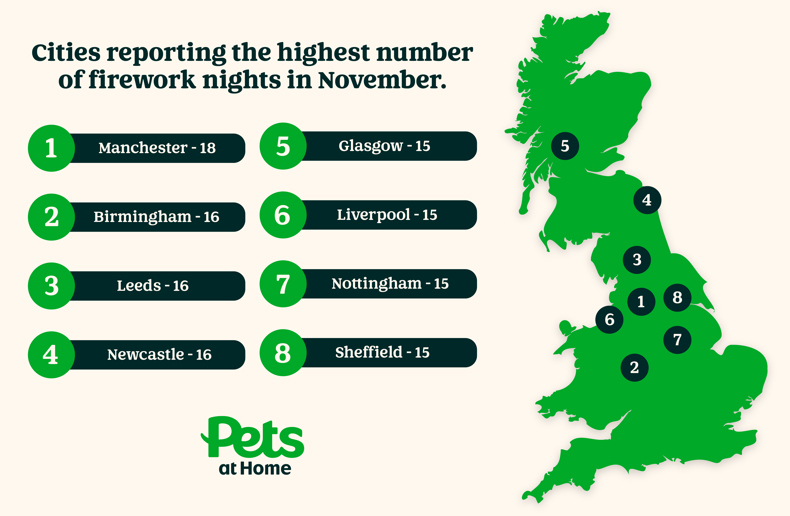
Firework activity varies a lot across the UK.
Manchester tops the list for the average number of nights owners hear fireworks in November, at 18 nights. Birmingham, Leeds and Newcastle are all 16 nights each.
Late-night fireworks also cause problems. Manchester leads here too, with 36.7% of people reporting fireworks after midnight, followed by Brighton (32.8%) and Leeds (31.7%).
How to help your pet before, during and after fireworks
While we can't always control when fireworks happen, there are plenty of ways to help our pets feel more secure.
Recognise the signs of stress
Every animal responds differently, and signs of anxiety aren't always obvious.
Dogs may pace, pant, tremble, bark, whine or try to escape. Cats often hide, hiss, become unusually alert or eat less than normal. Rabbits, guinea pigs and other small pets may freeze, stamp, tremble, breathe more quickly or show changes in appetite and toileting.
Prepare early
Create a quiet, comfortable retreat before firework season begins. Include familiar bedding, favourite toys, or even something carrying your scent.
Let your pet become familiar with the space and choose whether to use it. Never force them inside or pull them out if they're hiding.
Pheromone products and other calming aids may help some animals when introduced in advance.
If your pet has previously shown a lot of fear, speak to your vet early. They can discuss appropriate treatment, or referral to a qualified clinical animal behaviourist.
Check local display information where possible, and make sure your dog or cat's microchip details are up to date in case they escape.
Keep pets secure and reduce the noise
Walk dogs during daylight hours, before fireworks are likely to begin, and keep them on a secure lead. Never take a dog to a firework display or leave pets unattended outdoors during fireworks.
Bring cats inside before dark, secure the cat flap and provide clean litter trays.
Close windows, curtains and blinds to reduce noise and block flashes. Indoor lights and familiar television, radio or music at a comfortable volume may also help.
Offer a favourite toy, treat or puzzle feeder if your pet wants a distraction, but never force them to play or eat.
Make sure everyone in the house knows to keep external doors closed, and check that outdoor enclosures are secure.
Helping dogs feel safe
Let your dog decide whether to hide, pace or stay close to you. Remain calm and offer gentle reassurance if they seek it, but don't force physical contact. In the past there was the perception that reassurance can make fear or stress worse, but this is not true.
Never punish barking, whining, toileting accidents or other fear-related behaviour. Where possible, avoid leaving your dog alone during fireworks.
Helping cats feel safe
Give cats several hiding options, such as covered beds, boxes or elevated spaces.
Keep food, water and litter trays easily accessible, and let your cat remain hidden for as long as they need. Don't pull them out or repeatedly coax them into the open.
Stay nearby if possible, but let them decide whether they want attention.
Helping rabbits, guinea pigs and other small pets
If your small pet is accustomed to spending time indoors, consider moving their enclosure into a quiet, cool, well-ventilated room before fireworks begin.
If the enclosure must stay outside, turn it towards a wall or fence to help block light, and cover the back and sides with thick blankets to help muffle sound. Always maintain ventilation and ensure blankets can’t fall inside or be chewed.
Provide extra bedding, tunnels and hiding places, and keep bonded animals together. Check that water bottles and bowls remain secure, and keep bonfires, smoke and fireworks well away from their accommodation.
After the fireworks
Once the noise stops, maintain a calm environment and return to your pet's normal routine.
Monitor eating, drinking, toileting and behaviour, and check outdoor areas for firework debris or damage before letting pets outside. Keep cats indoors until nearby fireworks have finished.
Contact your vet if your pet is severely distressed, injures themselves as a result of panic or distress, remains distressed after fireworks have ended, or shows prolonged changes in eating, drinking or toileting habits. Breathing difficulties or a cat struggling or unable to urinate require emergency veterinary attention.
Calming products and other essentials
A few carefully chosen products may help make firework season more comfortable.
-
Calming aids: Pet-specific treats, supplements, pheromone diffusers and sprays may help some animals, although effectiveness varies. These are best purchased and used well in advance of the stressful period.
-
Comfort and safe spaces: Soft beds, blankets, crates and covered dens offer cosy places to hide away.
-
Enrichment and distraction: Lick mats, suitable long-lasting chews, puzzle feeders and interactive toys can help occupy pets.
-
For small pets: Hideouts, tunnels, extra bedding and shelter accessories provide additional security.
These products work best alongside good preparation and reassurance. For pets with significant anxiety, seek vet advice rather than relying on calming products alone.
How to be a considerate neighbour
Helping pets through firework season isn't just down to their owners. A little consideration from everyone can make celebrations less stressful.
If you're planning a display, consider:
-
Letting neighbours know beforehand, so they can prepare their pets.
-
Choosing lower-noise fireworks to reduce the impact of loud bangs.
-
Keeping displays shorter.
-
Celebrating around established occasions, like Bonfire Night, where possible.
-
Starting and finishing earlier, particularly given that 48% of surveyed owners report fireworks after 11pm.
You don't have to give up celebrating to be considerate. Sometimes, a little advance warning makes all the difference.
Our response to a government consultation
What changes do pet owners want to see?
Under the current rules in England and Wales, consumer fireworks can have a maximum permitted noise level of 120 decibels under the applicable test standard. Fireworks generally cannot be set off between 11pm and 7am, with later cut-off times on certain celebrations.
At Pets at Home, we strongly support reducing the maximum permitted noise level for consumer fireworks from 120 dB to 90 dB, the lowest option proposed.
However, volume isn't the only issue. The unpredictability, frequency and duration of fireworks can also cause distress, making it difficult for owners to prepare their pets.
So we also support measures that make firework use more predictable.
Pet owners are calling for change
A survey found that 92% of pet owners support at least one further restriction or regulation on fireworks.
The most popular proposals include firework-free zones around animal shelters, kennels, stables, veterinary practices and hospitals (43.3%), restricting fireworks to before 9pm (42.5%) and limiting higher-noise fireworks to professional displays (41.4%).
Other measures include shorter sales periods around Bonfire Night, and lower noise limits for all fireworks (both 38.9%). Almost half of owners (47%) also support restricting fireworks to specified dates each year.
Let's make firework season kinder for pets
Fireworks are a great way to celebrate, but we should still always look at ways to make them less frightening for our pets.
Download the free window poster, share the social assets and help spread awareness in your community.
A little consideration can go a long way towards making firework season safer, calmer and kinder for the animals we love.